.png)

AI vs. AI: The Ongoing Battle Between Cyber Defenders and Attackers
In the ever-evolving landscape of cybersecurity, artificial intelligence (AI) has emerged as a double-edged sword. On one hand, it serves as a powerful defensive tool, enhancing threat detection and response capabilities.
On the other hand, it has become a formidable weapon for attackers, enabling them to launch more sophisticated and elusive attacks. As we enter 2025, the battle between AI-driven cyber defenders and attackers has reached a critical juncture, with both sides leveraging this technology to gain the upper hand.
This blog aims to provide a comprehensive overview of this ongoing battle, exploring recent developments, case studies, and strategies for staying ahead in the AI-driven cybersecurity landscape.
The Rise of AI in Cybersecurity Defense
AI has revolutionized cybersecurity defense mechanisms, offering unprecedented capabilities for threat detection and response. As attackers become more sophisticated, defenders are turning to AI to stay ahead.
Overview of AI Applications in Cybersecurity Defense Mechanisms
AI applications in cybersecurity defense mechanisms are diverse and powerful. They include:
- Threat Detection and Response: AI-powered systems use machine learning algorithms to detect network irregularities, identify phishing attempts, and find zero-day vulnerabilities in real time. These systems excel at processing large volumes of data and providing actionable insights.
- Behavioral Analytics: By examining user activity patterns, AI can detect variations that indicate insider threats or compromised credentials.
- Predictive Intelligence: Predictive models foresee emerging dangers based on historical data and global threat intelligence streams, allowing for proactive countermeasures.
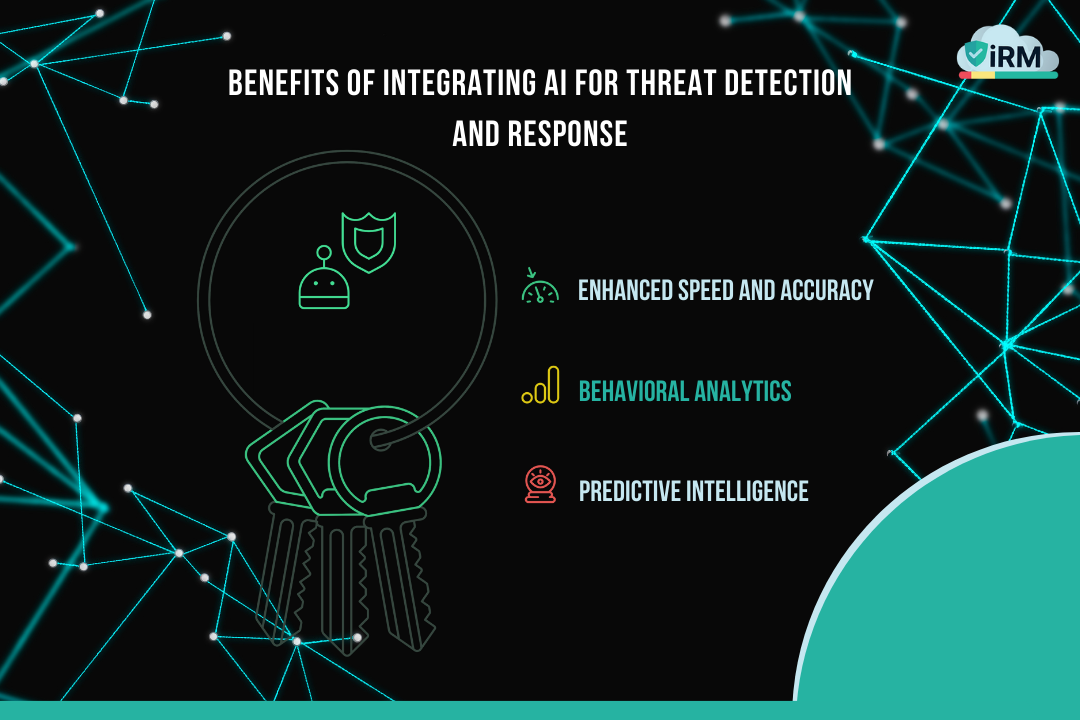
Benefits of Integrating AI for Threat Detection and Response
The integration of AI in cybersecurity defense mechanisms offers several significant benefits:
- Enhanced Accuracy and Speed: AI can analyze vast amounts of data more quickly and accurately than human analysts, reducing the time to detect and respond to threats.
- Proactive Defense: AI-driven systems can identify potential vulnerabilities and take preventive measures before an attack occurs.
- Resource Optimization: AI automates many routine tasks, freeing up human analysts to focus on more complex and strategic issues.
The Emergence of AI-Driven Cyber Attacks
Attackers are increasingly leveraging AI to enhance their tactics, making their attacks more sophisticated and difficult to detect. This shift has significant implications for cybersecurity defense.
Explanation of How Attackers Are Leveraging AI to Enhance Their Tactics
Attackers are using AI in several ways to enhance their tactics:
- AI-Powered Malware: Attackers use AI to construct polymorphic malware that can change its code to avoid detection.
- Deepfake Technology: AI-generated deepfakes are used in social engineering, fraud, and misinformation campaigns.
- Automated Attacks: AI automates reconnaissance, vulnerability assessment, and exploitation, greatly lowering the time required to carry out attacks.
Examples of Recent AI-Facilitated Cyber Attacks
Several recent cyber-attacks highlight the growing use of AI by attackers:
- Deepfake-Driven Phishing: Attackers have used AI to create highly realistic deepfake videos and audio recordings to conduct sophisticated phishing campaigns.
- AI-Enhanced Ransomware: Cybercriminals are employing AI to identify high-value targets and tailor ransomware attacks to maximize impact.
Case Studies
Detailed analysis of specific instances where AI was used by both defenders and attackers provides valuable insights into the ongoing battle.
Detailed Analysis of Specific Instances Where AI Was Used by Both Defenders and Attackers
Case Study 1: AI in Financial Sector Defense
A major financial institution used AI to detect and respond to a sophisticated phishing campaign targeting its customers. The AI system identified the attack in real-time and prevented significant financial losses. This case highlights the effectiveness of AI in detecting and mitigating threats quickly.
Case Study 2: AI-Driven Attack on Critical Infrastructure
Hackers used AI to breach a critical infrastructure facility, exploiting vulnerabilities in IoT devices and causing disruptions. The defenders later implemented AI-driven zero-trust architecture to enhance security. This case underscores the importance of continuous adaptation and innovation in cybersecurity defense.
Lessons Learned from These Cases
- Importance of Continuous Monitoring and Adaptation: Both defenders and attackers must continuously adapt their strategies to stay ahead in the AI-driven cybersecurity landscape.
- Need for Robust AI Training and Testing: Defenders must ensure their AI systems are thoroughly trained and tested to avoid vulnerabilities that attackers can exploit.
Strategies for Cyber Defenders
To stay ahead in the AI-driven cybersecurity landscape, defenders need to adopt advanced strategies and best practices.
Best Practices for Implementing AI in Cybersecurity Defenses
To effectively implement AI in cybersecurity defenses, organizations should consider the following best practices:
- Invest in AI Research and Development: Governments and businesses should fund AI research to stay ahead of adversaries and construct robust systems.
- Strengthen Public-Private Partnerships: Collaborative efforts can improve information sharing, standardize methods, and speed up threat mitigation.
- Enhance AI Explainability: Creating interpretable AI models promotes transparency and trust, facilitating compliance and decision-making.
Recommendations for Staying Ahead in the AI-Driven Cybersecurity Landscape
To stay ahead in the AI-driven cybersecurity landscape, organizations should:
- Adopt Generative AI for Cyber Defense: Use advanced language models to simulate attack scenarios, create training datasets, and strengthen protection techniques.
- Implement AI-Driven Zero-Trust Architecture: AI can dynamically assess context and behavior to implement granular access controls.
- Build a Skilled Workforce: Upskill the workforce in AI and cybersecurity to meet future needs.
Future of AI in Cybersecurity
As AI continues to evolve, the cybersecurity landscape will become even more complex. Defenders must remain vigilant, continuously innovate, and collaborate to stay ahead of AI-driven threats.
The future of cybersecurity depends on our ability to harness the power of AI for defense while mitigating its risks. By adopting a proactive and collaborative approach, we can ensure that AI remains a powerful tool for protecting our digital assets.
Ready to fortify your digital defenses with cutting-edge AI solutions? Contact iRM today to learn how our advanced cybersecurity strategies can protect you from AI-driven threats. Click here to get started! Contact Us